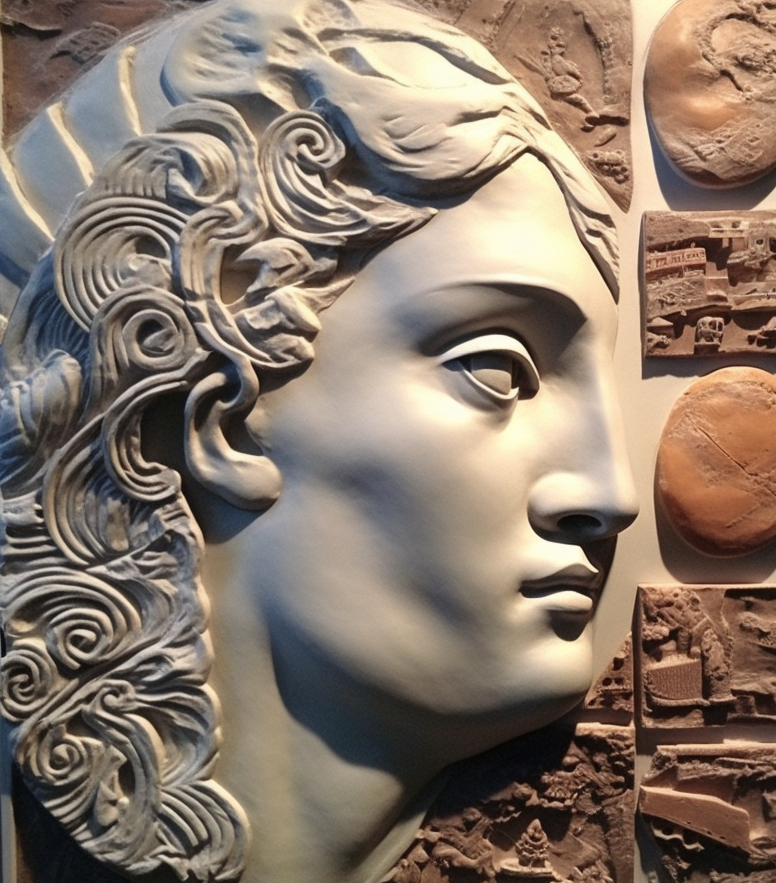
Zakros Project Overview: Ethical, Methodological and Interpretive Foundations
Introduction
The Zakros Project is a digital initiative focused on exploring the undeciphered Minoan script known as Linear A. With a dual-engine framework—Zakros AI and Zakros Brain—the project merges interpretive speculation with structured, citation-based linguistic analysis. This paper outlines the rationale, ethical foundations, methodology, and scholarly significance of the Zakros tools, designed to support a wider understanding of Linear A while respecting the cultural and historical weight of its source material.
Project Objectives
To offer a speculative interpretive framework for Linear A inscriptions through conversational AI
To build a citation-driven analytical engine grounded in established Linear A scholarship
To make the study of Linear A accessible and engaging to both academic and public users
Methodological Framework
Zakros AI: Speculative Interpretation Engine
Zakros AI is a GPT-powered assistant that draws from archaeological scholarship, Minoan cultural references, and known Linear A patterns to construct plausible, speculative interpretations. It enables users to ask questions about inscriptions, receive narrative reconstructions, and explore thematic possibilities. However, it always labels its outputs as speculative and encourages responsible use of the information.
Function: Conversational assistant with dynamic interpretive generation
Use Case: Exploratory hypotheses, engagement, teaching
Limitations: Outputs are speculative unless otherwise cited or cross-referenced
Zakros Brain: Structured Interpretive Logic
Zakros Brain is a role-based analytical engine that interprets Linear A glyph sequences by tagging each glyph according to known or inferred grammatical roles—such as noun, unit, agent, or closure. Outputs are colour-coded by confidence, with authenticated meanings in green, speculative glue in red, and low-confidence narrative transitions in blue italics.
Function: Structured translation engine using a template system
Use Case: Experimental reconstructions, syntax studies, corpus visualisation
Data Sources: GORILA corpus, SigLA entries, Duhoux (1992), Younger (2009), and others
Ethical Considerations
Transparency: Every speculative output is labelled. Users are shown confidence levels, citation trails, and interpretive logic.
Cultural Sensitivity: The system avoids imposing definitive meanings on a script not yet deciphered and includes disclaimers about speculative content.
Scholarly Attribution: All interpretive content is linked back to known academic sources. A provenance trail is included in the backend of Zakros Brain.
User Empowerment: The platform invites public participation while cautioning users not to treat any result as definitive.
Data Governance
All glyph glosses, interpretations, and reconstructions are traceable to published sources. Each dataset is versioned and updated only with full citation. External scraping is subject to usage rights and ethics protocols.
Future Development
Incorporation of SigLA and John Younger's full glyph tables
Visual glyph comparison and tagging interface
Publication and peer-review pipeline for user-submitted reconstructions
Interactive map linking glyph distribution to excavation sites
Conclusion
Zakros is not a decipherment engine—it is a dialogue engine. It respects the limits of what we know while expanding how we might think about what we do not. Its dual structure, ethical commitment, and citation-first framework make it a rare tool in the study of ancient writing systems.
Scholars, hobbyists, and the culturally curious alike are invited to engage, contribute, and question. The past does not whisper its meanings easily—but perhaps, with care, we can learn to listen better.
Lead Developer & Author: George Sfougaras
In collaboration with OpenAI-powered systems and the wider Linear A scholarly community.